
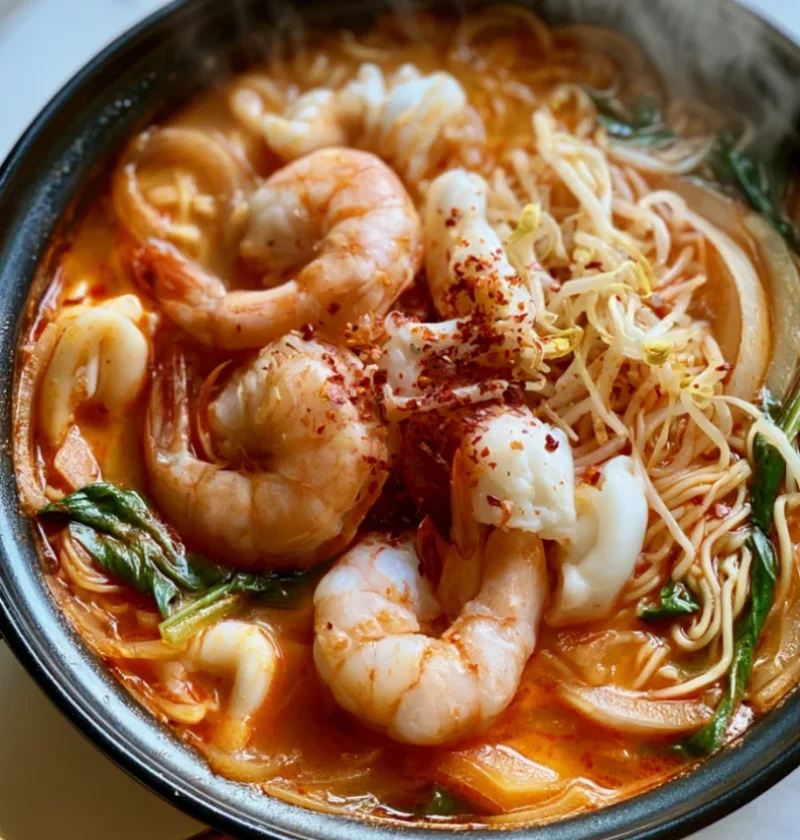
Jjamppong is a delightful spicy seafood noodle soup that hails from Korea, loved for its robust flavors and vibrant colors. This dish is a staple in Korean cuisine, often enjoyed as a quick lunch or a comforting dinner. The combination of fresh seafood, vegetables, and a spicy broth makes Jjamppong not only flavorful but also visually appealing. Traditionally, it is made with a variety of seafood, lending to its umami flavor profiles that tantalize the palate. Whether you’re new to Korean food or a longtime fan, making Jjamppong allows you to experience a slice of Korea’s culinary richness right in your kitchen. Interestingly, Jjamppong was influenced by Chinese cuisine and has evolved into a beloved dish that showcases local ingredients and tastes. This dish is not only a meal but also a cultural experience, often shared with family and friends.
Ingredients
- For the Soup Base:
- 4 cups seafood broth (or vegetable broth for a lighter version, potentially made from simmering vegetables for added depth of flavor)
- 2 tbsp chili oil for cooking (adjust the amount for your spice tolerance; different brands may have varying heat levels)
- 3 cloves garlic, minced (fresh garlic gives a better flavor than pre-minced)
- 1 inch ginger, sliced thinly (this adds a vibrant note to the broth)
- 1 medium onion, sliced (yellow or white onions work best)
- 1 medium carrot, julienned (for both sweetness and color)
- 1 cup napa cabbage, chopped (this can be substituted with bok choy or green cabbage)
- 1 cup mushrooms (shiitake or enoki), sliced (these add an earthy flavor that complements the seafood)
- 1-2 green chilies, sliced (adjust based on spice preference; Korean green peppers are ideal)
- 2 tsp soy sauce (use low-sodium soy sauce for a healthier option)
- Salt and pepper to taste (freshly cracked pepper adds a lovely warmth)
- For the Noodles:
- 8 oz fresh or dried udon noodles (substitute with gluten-free noodle options if needed; rice noodles are a good alternative if seeking a lighter option)
- For Toppings:
- 1 cup mixed seafood (shrimp, squid, mussels; consider using frozen seafood if fresh is unavailable, ensuring it’s thawed properly)
- 2 green onions, chopped for garnish (adds a fresh crunch and color)
- Sesame seeds for garnish (optional; they add texture and nutty flavor)
Steps / Instructions
- In a large pot, heat the chili oil over medium heat. Add the minced garlic and sliced ginger; sauté for about 1 minute until fragrant, taking care not to burn them as this can make the soup bitter. This step is crucial for building the flavor base from the outset.
- Add the sliced onion and carrot to the pot, cooking for an additional 3-4 minutes until the vegetables begin to soften and the onions turn translucent, enhancing the flavor base. Stir occasionally to ensure even cooking and prevent sticking.
- Stir in the chopped napa cabbage, mushrooms, and green chilies. Cook for 2-3 minutes, allowing the vegetables to wilt and their flavors to meld together beautifully. You should see the cabbage reduce in volume as it cooks.
- Pour in the seafood broth and bring the mixture to a boil. Once boiling, reduce the heat to a simmer, adding soy sauce, salt, and pepper to taste. The broth should be aromatic and flavorful at this stage, filling your kitchen with enticing scents.
- Add the mixed seafood to the pot and simmer for about 3-5 minutes until the seafood is cooked through and tender, ensuring that the shrimp turns pink and opaque. The seafood should be cooked just right—tender but not rubbery.
- Meanwhile, cook the udon noodles according to package instructions. Drain and rinse under cold water to stop the cooking process and prevent them from becoming too soft. This step is essential to maintain the noodles’ texture when added to the soup.
- Once the soup is ready, divide the cooked udon noodles into bowls and ladle the hot soup over the noodles, ensuring an even distribution of seafood and vegetables in each bowl. The contrast of the hot broth with the noodles adds an exciting texture.
- Garnish each bowl with chopped green onions and sesame seeds before serving, enhancing both the visual appeal and flavor of your Jjamppong. This simple touch can elevate your dish from ordinary to restaurant-worthy.
Tips & Tricks
To achieve the best flavor in your Jjamppong, consider using high-quality seafood broth as a base. Feel free to experiment with the types of seafood; fresh shrimp, calamari, and mussels work beautifully together. For a healthier twist, increase the vegetable content by adding bell peppers, snap peas, or even bok choy, which can further enhance the dish’s nutritional profile. You can learn more about this topic and its variations across different regions, including how different styles of Jjamppong reflect local tastes and available ingredients.
If you want to make this dish ahead of time, prepare the soup base and refrigerate it for up to 2 days. When ready to serve, reheat the broth, add fresh seafood, and cook the noodles separately. This will prevent the noodles from becoming soggy, preserving their texture. Check out our related guide for more tips on meal prep and storage options, ensuring you enjoy this flavorful dish whenever you desire.
Common mistakes to avoid include overcrowding the pot with seafood, which can lead to uneven cooking. Stick to the recommended quantities for the best texture and flavor. Always taste your broth before serving, adjusting seasoning as needed to ensure your Jjamppong is perfectly balanced. Enjoy this colorful dish that embodies the essence of Korean comfort food, and don’t hesitate to share your own variations to inspire others!
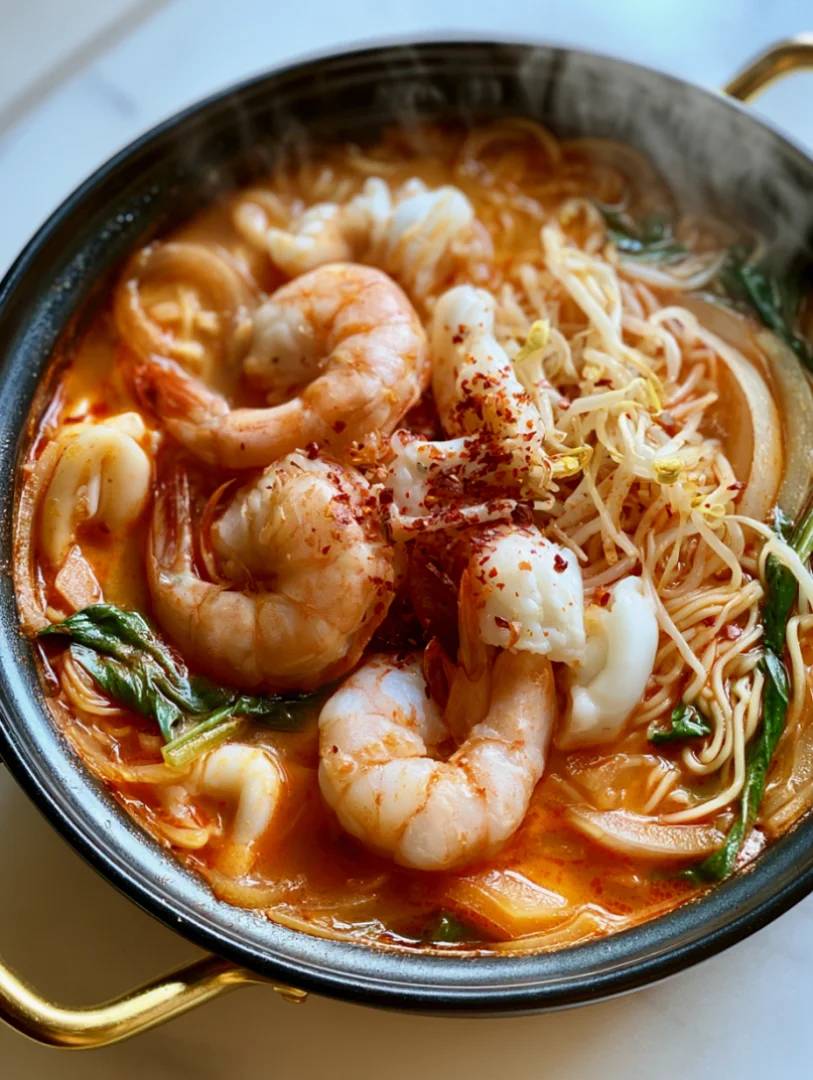
Jjamppong: Brighten Your Day with Spicy Seafood Noodle Soup
Jjamppong is a delightful spicy seafood noodle soup that hails from Korea, loved for its robust flavors and vibrant colors. This dish is a staple in Korean cuisine, often enjoyed as a quick lunch or a comforting dinner. The combination of fresh seafood, vegetables, and a spicy broth makes Jjamppong not only flavorful but also visually appealing.
Ingredients
- For the Soup Base:
- 4 cups seafood broth (or vegetable broth for a lighter version)
- 2 tbsp chili oil for cooking
- 3 cloves garlic, minced
- 1 inch ginger, sliced thinly
- 1 medium onion, sliced
- 1 medium carrot, julienned
- 1 cup napa cabbage, chopped
- 1 cup mushrooms (shiitake or enoki), sliced
- 1-2 green chilies, sliced
- 2 tsp soy sauce
- Salt and pepper to taste
- For the Noodles:
- 8 oz fresh or dried udon noodles
- For Toppings:
- 1 cup mixed seafood (shrimp, squid, mussels)
- 2 green onions, chopped for garnish
- Sesame seeds for garnish (optional)
Directions
In a large pot, heat the chili oil over medium heat. Add the minced garlic and sliced ginger; sauté for about 1 minute until fragrant.
Add the sliced onion and carrot to the pot, cooking for an additional 3-4 minutes until the vegetables begin to soften.
Stir in the chopped napa cabbage, mushrooms, and green chilies. Cook for 2-3 minutes.
Pour in the seafood broth and bring the mixture to a boil. Reduce the heat to a simmer, adding soy sauce, salt, and pepper to taste.
Add the mixed seafood to the pot and simmer for about 3-5 minutes until the seafood is cooked through.
Meanwhile, cook the udon noodles according to package instructions. Drain and rinse under cold water.
Once the soup is ready, divide the cooked udon noodles into bowls and ladle the hot soup over the noodles.
Garnish each bowl with chopped green onions and sesame seeds before serving.
Nutrition Facts
Recipe Reviews
- ★★★★★
Excellent recipe!
Leave a Reply
Your email address will not be published. Required fields are marked *







Excellent recipe!